
School of Vice: Despite its strictly centralised national leadership style, Vietnam's Communist Party sees the benefit and necessity in reshuffling its talents and resources among the party's highest ruling leadership and decision-making echelons from time to time; a reflection of the old Soviet type of observing the moods, factions and consensus within the party. Yet, it is unclear how much of actual 'democratic' change is allowed - if at all - as a result of this kind of exercise and formality which could simply be a means by which the party hopes to freshen up its image and rid itself of 'unhealthy' elements within its powerful organs; or simply a means by which the old guards consolidate themselves in power within the party .
Certainly, there appears to be in place a distinct collective leadership structure and consensus at the heart of this party which implies that national policies and decisions will have been arrived at following a due process of reflection and discussion among its central committees and organs, rather than being a feature of the diktats and whims of the "Strongman" with hundreds of hand-picked sycophantic "advisers" to tell him what to do; the kind of situation facing Cambodia at present time, notwithstanding her constitutional pretensions to multi-party democracy and the like.
27 មករា 2016 voa
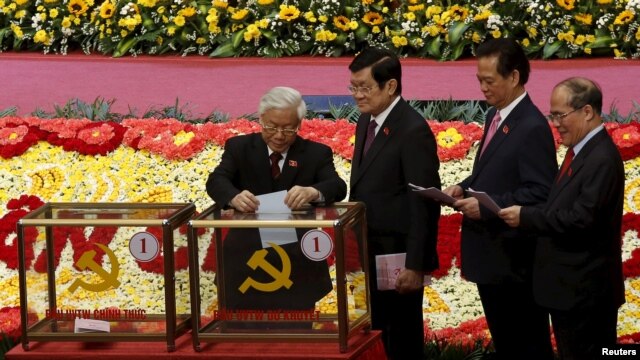 |
| លោក Nguyen Phu Trong ប្រធានគណបក្សកុម្មុយនិស្តវៀតណាម នៅក្នុងការបោះឆ្នោតប្រធានគណៈកម្មាធិការកណ្តាល នៅថ្ងៃទី២៦ ខែមករា ឆ្នាំ២០១៦។ |
កាលពីថ្ងៃអង្គារ អគ្គលេខាធិការគណបក្សកុម្មុយនិស្តវៀតណាមបានឈ្នះឆ្នោតទទួលកៅអីមួយនៅក្នុងគណៈកម្មាធិការសំខាន់មួយ ដែលជាជំហានទីមួយឆ្ពោះទៅកាន់ការរក្សាទុកតំណែងលោកជាប្រធាននៃក្រុមមេដឹកនាំជាសមូហភាពនៃប្រទេសវៀតណាម។
ក្រុមប្រតិភូមួយចំនួនបាននិយាយថា អគ្គលេខាធិការគណបក្សលោក Nguyen Phu Trong បានទទួលសំឡេងគាំទ្រជាង៨០ភាគរយពីក្រុមប្រតិភូនៅក្នុងសមាជគណបក្សដើម្បីឱ្យបានជាប់ឆ្នោតនៅក្នុងគណៈកម្មាធិការកណ្តាលគណបក្សដែលជាសរសរមួយក្នុងបណ្តាសរសរស្តម្ភពីរនៃគណបក្សគ្រប់គ្រងប្រទេស។
នៅពេលនេះគេរំពឹងថា លោកនឹងជាប់ឆ្នោតនៅក្នុងការិយាល័យនយោបាយថ្មីរបស់គណបក្ស ដែលត្រូវបានចាត់ទុកថាគ្រាន់តែជាការបង្គ្រប់កិច្ចនៅក្នុងអន្តរកាលអំណាចត្រូវសម្របសម្រួលដែលកើតមានឡើងរៀងរាល់ប្រាំឆ្នាំម្តង។
រដ្ឋធម្មនុញ្ញនៃប្រទេសវៀតណាមផ្តល់សិទ្ធិឱ្យគណបក្សកុម្មុយនិស្តគ្រប់គ្រងប្រទេសហើយប្រជារាស្ត្រនៃប្រទេសវៀតណាម៩៣លាននាក់គ្មានមុខនាទីដោយផ្ទាល់ក្នុងការបោះឆ្នោតជ្រើសរើសពួកមេដឹកនាំគណបក្សទេ។
ការបោះឆ្នោតជ្រើសតាំងលោក Trong មិនមែនគ្មានបញ្ហាទេ។ លោកបានប្រឈមមុខនឹងការប្រកួតប្រជែងក្នុងរយៈពេលខ្លីមួយពីសំណាក់នាយករដ្ឋមន្ត្រី Nguyen Tan Dung ដែលជាអ្នកកាន់តំណែងទីពីរបន្ទាប់ពីលោកដែលមានមហិច្ឆតាសម្រាប់តំណែងកំពូលនេះ។
ក៏ប៉ុន្តែលោក Dung បានដកខ្លួនថយចេញពីការប្រកួតប្រជែងនេះ ដែលបើកផ្លូវឱ្យលោក Trong នៅកាន់តំណែងតទៅទៀតបាន។
គេយល់ឃើញថាលោក Dung ជាមេដឹកនាំម្នាក់លម្អៀងទៅខាងវិស័យជំនួញដែលក្រុមអ្នកបណ្តាក់ទុនមានជំនឿថា លោកនឹងបន្តកំណែទម្រង់សេដ្ឋកិច្ចដែលលោកបានរៀបចំឱ្យមានកាលពី១០ឆ្នាំកន្លងទៅនេះ។
គេក៏យល់ឃើញដែរថាលោកក៏មានសមត្ថភាពក្នុងការប្រកាន់ជំហររបស់លោកនៅក្នុងករណីមានការប្រឈមមុខជាមួយប្រទេសចិនដែលបានទាមទារទឹកដីក្នុងសមុទ្រចិនខាងត្បូងថាជារបស់ផងខ្លួន។
គេយល់ឃើញថាលោក Trong ជាអ្នកលម្អៀងទៅខាងចិននិងជាអ្នកអភិរក្សនិយមខាងសេដ្ឋកិច្ចម្នាក់។ ក្រុមអ្នកធ្វើការវិភាគនិយាយថា ការដែលលោក Trong បានជាប់ឆ្នោតប្រហែលជានាំឱ្យមានការបន្ថយល្បឿនកំណែទម្រង់ ក៏ប៉ុន្តែមិនមែនបង្អាក់ការកែទម្រង់ទាំងនេះទេ។ លោក Trong ក៏មិនទំនងជានឹងឱនលំទោនជាមួយប្រទេសចិនដូចអ្នកខ្លះបារម្ភនោះឡើយ៕


No comments:
Post a Comment