
The country has grand plans, but not everyone is a winner.
By Nathan A. Thompson
March 11, 2016
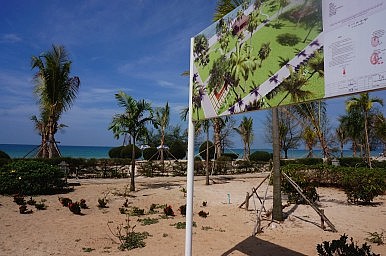 |
| Image Credit: Nathan A. Thompson |
When
Ieng Ty first stepped onto Otres beach in southern Cambodia, it was
empty. He stood for a while, looking over translucent green waters to
the hazy blue sky. Behind him, scrubby trees swayed in the firm breeze.
An upsetting memory surfaced and, for a second, the surf sounded like
the raspy breath of those people he’d seen starve in dry rice fields. He
shuddered and wondered what to do next.
It
was 2001, just four years after the last of the Khmer Rouge generals
defected to the government ending the last chapter of a civil war that
had raged ever since the ousting of the Maoist regime by Vietnamese
forces in 1979. They had marched people from their homelands and forced
them to work on collectivized farms. Around two million people died in
the subsequent purges, famine and fighting.
“What can we do?” says Rath. “We have no power. We can only cry and be sad.”
Ty
rubbed his sun-blackened skin; he felt the wounds of having home and
history ripped away almost physically. He looked to his younger sister
who had survived by clinging to him through those awful years. They had
heard that there was money to be made from the slow trickle of tourists
who had started visiting the coast. He looked back out to sea. Lush
islands mushroomed in the distance.
The
first years were difficult. Otres had no road, electricity or running
water. “We built a little restaurant but we didn’t get many customers at
first,” Ty says. “But two or three locals would come and sometimes
foreigners too. We earned around $10 per day.”
Today,
Ty’s restaurant has become a popular beachside venue and hotel. He also
has a small shop and tour company specializing in trips to local
islands. He employs 18 members of his extended family. He’s located on a
small strip of independently owned bungalow resorts and bars that cater
to Westerners who like the independent, secluded atmosphere. “I like it
because it’s really natural and undeveloped,” says Alexa, an American
backpacker, enjoying a sunset stroll on the sand.
But
Ty will soon be forced to leave. His sister, Rath, shows me the
eviction notice. She points out a word in bold in the penultimate
paragraph. “This is a strong word,” she explains. “It says we must leave
by 13th of March.” The notice, served by government officials, goes on
to say the government will not be responsible for any damage to their
property after that date. All of the businesses on Otres received the
same note. Bungalows, kitchens and sun beds belonging to over two dozen
businesses will be bulldozed.
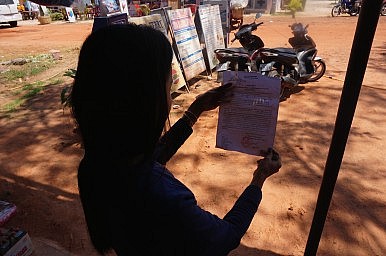
Image: Nathan A. Thompson
The
trouble for Ty and other business owners on Otres is that they have no
legal right to be there. Like the rest of Cambodia’s coast, the beach
was designated as “state public land” as part of the 1992 Land Law,
making it illegal to buy or sell. So they do not own the land on which
they operate. “The site will be cleared according to our law,” says
provincial governor, Yun Min.
But
Ty and other operators feel aggrieved because they have all paid money
to have businesses on Otres. The prices for soft deeds and licenses have
increased with the tourist traffic. The number of overseas tourists
visiting Cambodia has doubled since 2006, reaching close to 5 million
last year, and is expected to increase a further 3 million by 2020,
according to government figures. In recent years, soft deeds to property
on Otres have been changing hands for $50,000-$100,000, with the money
going to officials connected to the government, according to a report in
the Phnom Penh Post.
‘No Compensation’
“There
will be no compensation,” says Yun Min. He is speaking at a press
conference, mopping his brow under the beating sun. The location for the
meet is on Independence Beach, a few miles down from Otres. It’s the
site of a development owned by former provincial governor, Sbaung
Sarath. The wall and shell-like condo building have been demolished
because the land there is also “state land” and needed to be returned to
the government. Yun Min says he chose this location to show that even
wealthy people were being evicted.
The
reclaiming of Otres beach and the nearby Independence and Ochheuteal
beaches is part of a plan to develop the coastline “step-by-step,”
according to Yun Min. But the government have been cagey about detailing
their plans. “We’re clearing the land for environmental reasons,” says
Yun Min. “It’s in the public interest to preserve the beach for the next
generation.” No government official has commented further but Yun Min
encourages local people to “support their government’s plan to develop
the beach.”
Developmentally,
Cambodia is at a tipping point. In 2015, its per capita income was
projected by the World Bank to reach $1,096, surpassing the $1,045
threshold for classification as a lower-middle-income country. This
means that foreign aid, which has long been propping up the nation’s
coffers, will start to reduce. As the government gears up to meet its
target of becoming an upper-middle income country by 2030, new sources
of revenue need to be exploited.
Otres
beach, with its friendly bungalows and long, untouched stretch of sand
is loved by locals and tourists alike. But, looking at it with an
economic eye, it’s an underutilized asset in a country that needs to
find new ways to support itself. “It’s good the government is trying to
enhance its assets like any other country,” says David Van, managing
director in Cambodia for the consultancy firm Bower Group Asia. “A good
development would also impact significantly on local employment,” he
added.
There
are already plans to build an enormous casino with up to 3,000 hotel
rooms on Otres. In fact, 1500 meters was sold to London-listed company
Queenco in a joint deal with ex-governor, Sbaung Sarath. “The company
aims to develop a destination beachfront resort based around a casino,”
reads the Queenco website. It is unclear whether this specific
development will go ahead as the area of the beach has remained empty
since its sale in 2008.
Ty
isn’t against the development per se but he needs to support his
family. Facing the destruction of 16 years of hard graft with no
compensation has left him clutching at straws. “If the government wants
to develop the land, I agree with them,” he says. “But I demand they
give me some other plot on a different beach so I can continue to work.”
His request for an alternative plot, along with other pleas, was
delivered by 100 business owners from Otres and Ochheauteal beaches to
the National Assembly on February 19. There has been no reply.
At
the press conference, a woman speaks up in a trembling voice. She asks
governor Min if the present businesses would be allowed to continue
their trade within the new development. The governor smiles, “I have
forwarded all requests to the central government,” he says before
thanking the people for “supporting the government’s plan to develop the
beach.”
Today
Ty and Rath look out, not onto an empty beach, but onto a clean,
well-tended, slightly ramshackle, holiday destination. Customers lay on
sun loungers while other holidaymakers stroll past, enjoying the three
mile, unbroken walk from one end of Otres to the other. For them, this
journey of 16 years looks set to finish with a violent bulldozing. “What
can do we do?” says Rath. “We have no power. We can only cry and be
sad.”
Nathan A. Thompson is a freelance journalist based in Southeast Asia. Follow him on Twitter @NathanWrites.


No comments:
Post a Comment