
Certain political factions in Thailand and Cambodia view his role as harmful to their vested interests, analysts say
Maria Siow
Published: 8:00am, 26 Nov 2025Updated: 9:44am, 26 Nov 2025
Malaysian Prime Minister Anwar Ibrahim has insisted his country remains neutral as a mediator in the escalating border row between Thailand and Cambodia, as criticisms mount over his peacemaking role.
The backlash reflects how divisive the conflict has become, with some factions in Thailand and Cambodia viewing foreign-brokered truces as harmful to their interests. Analysts say Anwar is keen to avoid provoking such sensitivities, mindful of deep-seated distrust in Thai–Cambodian relations and Asean’s non-interference principle.
Speaking at a press conference on the sidelines of the G20 summit in Johannesburg on Saturday, Anwar said he had to “clear the air” following protests in Bangkok accusing Malaysia of meddling in Thailand’s sovereignty.
“Firstly, as neighbours, we are of course concerned [about the dispute], but we are not involved,” he said.
“We just facilitated to help them achieve a settlement or resolution to their conflict. We did not give them any specific prescription on how they should solve their problems,” Anwar said, adding that both countries considered Malaysia a “friend”.
Published: 8:00am, 26 Nov 2025Updated: 9:44am, 26 Nov 2025
Malaysian Prime Minister Anwar Ibrahim has insisted his country remains neutral as a mediator in the escalating border row between Thailand and Cambodia, as criticisms mount over his peacemaking role.
The backlash reflects how divisive the conflict has become, with some factions in Thailand and Cambodia viewing foreign-brokered truces as harmful to their interests. Analysts say Anwar is keen to avoid provoking such sensitivities, mindful of deep-seated distrust in Thai–Cambodian relations and Asean’s non-interference principle.
Speaking at a press conference on the sidelines of the G20 summit in Johannesburg on Saturday, Anwar said he had to “clear the air” following protests in Bangkok accusing Malaysia of meddling in Thailand’s sovereignty.
“Firstly, as neighbours, we are of course concerned [about the dispute], but we are not involved,” he said.
“We just facilitated to help them achieve a settlement or resolution to their conflict. We did not give them any specific prescription on how they should solve their problems,” Anwar said, adding that both countries considered Malaysia a “friend”.
His comments followed a demonstration held outside the Malaysian embassy in Bangkok over the weekend, where protesters accused Anwar of overstepping his earlier role as Asean chairman and interfering in Thailand’s handling of the dispute.
The protesters also claimed the United States was likewise attempting to exert undue influence over Thailand’s decisions.
Abdul Rahman Yaacob, a researcher at the Australian National University, said Anwar was keen to show that Malaysia was not taking any side, given that it could be interpreted as interference in the affairs of another Asean member.
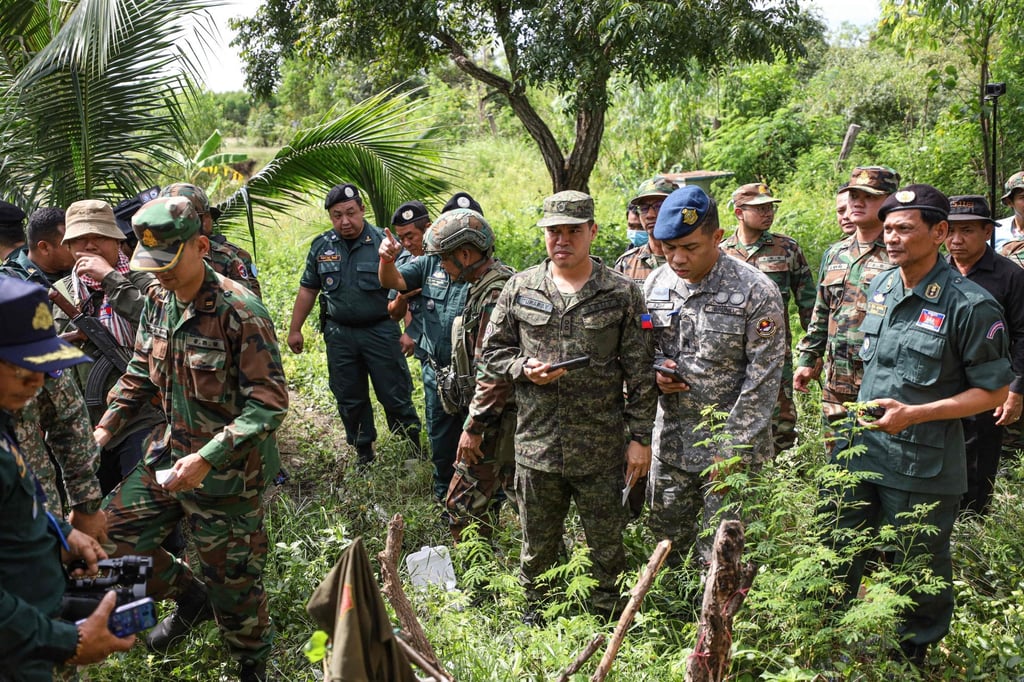
An Asean observer team visiting on November 13 an area along the Cambodia-Thailand border where a civilian was killed a day earlier. Photo: AFP
Any such move would contradict the Association of Southeast Asian Nations’ long-standing position on non-interference, he added.
“The protest reflects domestic Thai politics,” Rahman said, adding that some parties were not keen on supporting negotiations to end the border dispute due to their “political agenda”.
“Thailand’s domestic politics shape how Bangkok deals with Phnom Penh on border issues.”
Border tensions between the two countries erupted into fighting in July, when at least 48 people were killed, and about 300,000 were temporarily displaced. Since July 16, at least seven Thai soldiers have been severely injured in mine-related incidents.
In late July, both countries agreed on an initial truce following efforts by US President Donald Trump, Chinese diplomats and Anwar to end the conflict.
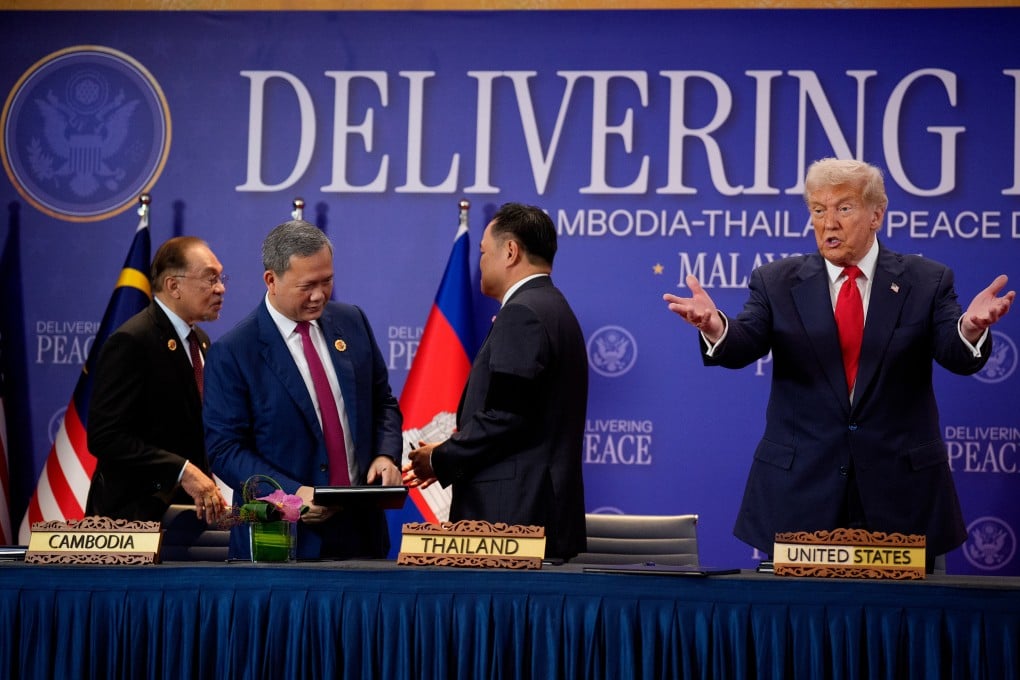
At the sidelines of the 47th Asean summit in Kuala Lumpur in October, Thai and Cambodian leaders signed a peace deal in the presence of Trump and Anwar.
Since then, border tensions between the two sides have restarted, prompting Malaysia’s offer to host fresh peace talks.
Oh Ei Sun, principal adviser of the Pacific Research Centre think tank in Malaysia, said Kuala Lumpur was just discharging its responsibility as Asean chair and a neighbour in arranging for a peaceful resolution of the conflict.
Some parties see ceasefires or peace settlements as harmful to their national interests and hence “resent” foreign offers to mediate, according to Oh.
“This sounds illogical but is sadly very real.”
A highly sensitive topic in Thai politics, the border dispute has often been used to criticise Bangkok for being weak.
Rangsi Kitiyansap, a retired army general known for his fiery rhetoric on the border conflict, has accused Anwar of being a “spy” and demanded that he stop interfering in Thailand’s affairs.
Azmi Hassan, a Malaysian foreign policy analyst, said that no previous Asean chair was willing to intervene in the border conflict due to Thailand’s consistent position that the issue should only involve itself and Cambodia.
With Trump insisting on the signing of the peace deal during the recently concluded Asean summit, things had become “messier”, Azmi said, particularly with Washington warning of further tariffs if Thailand and Cambodia did not agree.
Azmi Hassan, foreign policy analyst, on the recent Thailand-Cambodia peace deal signed in Kuala Lumpur
“The protest reflects domestic Thai politics,” Rahman said, adding that some parties were not keen on supporting negotiations to end the border dispute due to their “political agenda”.
“Thailand’s domestic politics shape how Bangkok deals with Phnom Penh on border issues.”
Border tensions between the two countries erupted into fighting in July, when at least 48 people were killed, and about 300,000 were temporarily displaced. Since July 16, at least seven Thai soldiers have been severely injured in mine-related incidents.
In late July, both countries agreed on an initial truce following efforts by US President Donald Trump, Chinese diplomats and Anwar to end the conflict.
At the sidelines of the 47th Asean summit in Kuala Lumpur in October, Thai and Cambodian leaders signed a peace deal in the presence of Trump and Anwar.
Since then, border tensions between the two sides have restarted, prompting Malaysia’s offer to host fresh peace talks.
Oh Ei Sun, principal adviser of the Pacific Research Centre think tank in Malaysia, said Kuala Lumpur was just discharging its responsibility as Asean chair and a neighbour in arranging for a peaceful resolution of the conflict.
Some parties see ceasefires or peace settlements as harmful to their national interests and hence “resent” foreign offers to mediate, according to Oh.
“This sounds illogical but is sadly very real.”
A highly sensitive topic in Thai politics, the border dispute has often been used to criticise Bangkok for being weak.
Rangsi Kitiyansap, a retired army general known for his fiery rhetoric on the border conflict, has accused Anwar of being a “spy” and demanded that he stop interfering in Thailand’s affairs.
Azmi Hassan, a Malaysian foreign policy analyst, said that no previous Asean chair was willing to intervene in the border conflict due to Thailand’s consistent position that the issue should only involve itself and Cambodia.
With Trump insisting on the signing of the peace deal during the recently concluded Asean summit, things had become “messier”, Azmi said, particularly with Washington warning of further tariffs if Thailand and Cambodia did not agree.
It was all White House’s show
Azmi Hassan, foreign policy analyst, on the recent Thailand-Cambodia peace deal signed in Kuala Lumpur
“That’s the false narrative that Anwar facilitated the accord, but right from the backdrop to the content of the accord, it was all White House’s show,” he added.
Describing the border situation as tense, Rahman said the tensions between Bangkok and Phnom Penh were due to distrust shaped by domestic politics and their past engagements with each other. He cited then Cambodian leader Hun Sen’s suspicion against Thailand over Bangkok’s logistical and other support for the rebels fighting against him in the 1980s.
“It is critical for Malaysia and Asean to facilitate Bangkok and Phnom Penh to talk to each other,” Rahman said.
Maria Siow is a long-time China-based correspondent and analyst with keen interest in East Asia. Maria has a masters degree in international relations.


No comments:
Post a Comment