“Let no man imagine that he has no influence. Whoever he may be, and wherever he may be placed, the man who thinks becomes a light and a power.”Henry George

Friday, 31 August 2012
Golden memories . . .


Cambodian Wonders 'What If' About Angelina Jolie
 |
| Mystery woman? - [google] |
Thu, 30 Aug 2012 06:08 GMT
Source: Content Partner // Womens ENews
Subhead: Lida moved from a subsistence existence in rural
Cambodia to a senior staff job at a women's advocacy organization in the city.
But she still wonders what would have happened if she had said "yes"
to a beautiful foreigner at a pagoda three years ago. Byline: Carly Rose Elson
Solida ("Lida") Ley
(WOMENSENEWS)--Solida ("Lida") Ley has a disarming
smile and gracious way of offering cold grape juice on a sweltering morning.
You see these things right away. It takes more time to
understand the courage and personal conviction it's taken to reach this point
in her life.
Lida was a young girl in the post-Khmer Rouge years. At a
time when 25 percent of the Cambodian population had just been murdered during
a government-led genocide, her father revealed that he had another wife and
family in a different village. He abandoned Lida, her mother and her sibling.
Not long after, Lida's mother crossed the Thai border
looking for work to sustain her family. After nearly a year, she sent word to
the family of the date she would be crossing the border back home. She never
showed up. To this day, no one knows what happened to her, or if she is even
alive. It was common then for thieves and human traffickers to target Cambodian
women returning across the Thai border, since it was likely the women were carrying
money they had saved up from their labor.
Raised by her grandmother, Lida was compelled to drop out of
elementary school to help out on the family farm. She hid a book among her few
personal items so she could study in her spare time. When she saved up enough
money, not much more than $20, she escaped at age 15 and went to the city to
look for work and educational opportunities.
While in the city of Siem Reap, home to world famous Angkor
Wat temple, Lida found work as a waitress and managed to survive on her
minuscule pay.
Standing Out
German leisure carrier Condor increases its presence in Southeast Asia
Condor starts to fly this winter to Yangon and Siem Reap from Frankfurt and signed a partnership with Bangkok Airways. The German leisure carrier adds consequently six new destinations in Southeast Asia for the winter schedule 2012/13.

FRANKFURT/BANGKOK - Thanks to a partnership with regional Thai carrier Bangkok Airways, German leisure airline Condor –an affiliate of Lufthansa- will add six destinations in Southeast Asia to its network. Condor passengers are now able to book directly flights up to Chiang Mai, Koh Samui and Pattaya in Thailand thanks to connecting flights from either Bangkok or Phuket both served by Condor out of Frankfurt. Other Condor destinations flown in partnership with Bangkok Airways include Phnom Penh and Siem Reap and Cambodia as well as Yangon in Myanmar. Thanks to its partnership with Bangkok Airways, passengers will be able to get their boarding pass direct to their final destination.
Condor flies also once a week to Yangon –every Tuesday out of Frankfurt- as well as to Siem Reap every Friday, also out of Frankfurt. The German carrier is the only one in Europe to propose a non-stop scheduled frequency to both destinations.
The integration of Yangon and Siem Reap into Condor timetable followed an earlier announcement in January 2012 to look at strengthening the carrier’s presence in Southeast Asia with new destinations and frequencies. From winter 2012/13, flights to Phuket will be increased from two to four frequencies per week. Condor is the only airline to fly non-stop out of Frankfurt to Thailand’s most famous resort island.
Condor is one of Europe’s largest leisure carriers. It transports over six million passengers a year to 75 destinations around the world. The fleet comprises 37 modern eco-friendly aircraft including 11 Boeing 767-300 and 13 Boeing 757-300 used on long-haul routes.
Bangkok Airways is Thailand’s oldest private airline as it was created in 1968. It has a fleet of 19 Airbus A319 and A320 as well as ATR 72. It flies to seven domestic destinations in Thailand and 11 destinations in Asia.
Condor flies also once a week to Yangon –every Tuesday out of Frankfurt- as well as to Siem Reap every Friday, also out of Frankfurt. The German carrier is the only one in Europe to propose a non-stop scheduled frequency to both destinations.
The integration of Yangon and Siem Reap into Condor timetable followed an earlier announcement in January 2012 to look at strengthening the carrier’s presence in Southeast Asia with new destinations and frequencies. From winter 2012/13, flights to Phuket will be increased from two to four frequencies per week. Condor is the only airline to fly non-stop out of Frankfurt to Thailand’s most famous resort island.
Condor is one of Europe’s largest leisure carriers. It transports over six million passengers a year to 75 destinations around the world. The fleet comprises 37 modern eco-friendly aircraft including 11 Boeing 767-300 and 13 Boeing 757-300 used on long-haul routes.
Bangkok Airways is Thailand’s oldest private airline as it was created in 1968. It has a fleet of 19 Airbus A319 and A320 as well as ATR 72. It flies to seven domestic destinations in Thailand and 11 destinations in Asia.
Cambodia: readers' tips, recommendations and travel advice
 |
| Ta Prohm [google] |
Following a recent article on exploring Cambodia, readers offer their advice on visiting the country.
HAPPY EATING
I agree with Maggie O’Sullivan that the Khmer Kitchen (khmerkitchens.com) is the best budget restaurant in Siem Reap. Go there in a tuk-tuk after you have done “happy hour” at the FCC (fcccambodia.com), which is also great value.
If you want to visit a school and orphanage, go to Savong’s School (savong.com), a genuine success story; even if you don’t go, then at least read about it.
Peter Kitto, online comment
If you’re arriving in Siem Reap by air, make sure you have your camera ready. The small airport affords an excellent photo opportunity on the short walk from the plane to the terminal. Pub Street may sound a bit brash by name but it has several good bars and restaurants.
Michael Johnson, Somerset
BIKE IT
Cycling is a great way to feel part of a country – you’re hailed by every child – and being on a bike among locals is great. We cycled to the Landmine Museum on the way to temple visits. Our holiday, courtesy of Exodus (0845 863 9600; exodus.co.uk), was superbly organised and included rural north Thailand as well as Ho Chi Minh City. Highly recommended.
Vic Green, online comment
BOOK IT
Our varied itinerary was put together by Cambodia Travel Plan (01273 322042; cambodiatravelplan.co.uk). Though some people will be tempted by big tour operators, we always prefer specialists in a certain country. This company has what it calls a “jigsaw” approach, letting you choose from different components and putting them together to suit your interests.
John Gordon, Edinburgh
DO GOOD
In Phnom Penh have a drink at The Foreign Correspondents Club or a meal at Friends (215 Street 13; 00855 12 802072; friends-international.org), where street children are trained to be waiters and chefs.
Derek Walter, online comment
RECOMMENDED READING
I cannot recommend too highly a book called Killing Fields, Living Fields by Don Cormack. It is a fascinating, beautifully written, well-researched account of Cambodia’s complicated history, including the author’s eyewitness view of the events of 1975 when the Khmer Rouge swept into Phnom Penh.
Yvette Albrecht, online comment
Wednesday, 29 August 2012
The Amazon Of Asia - Laos
The Mekong River is already being put to serious economic use by the Chinese, and now the Lao people are determined to do the same. But can it really pull the nation out of poverty, and at what cost?
Until recently the 'Amazon of Asia', was one of the world's last untouched rivers, but plans for a series of 55 dams in Laos look set to change that. With the majority of the population of Laos living below the poverty line, the government claims that hydropower is the quickest way to raise living standards, anticipating revenue of $80 million a year. Yet as scores of villages are uprooted to make way for the development, traditional subsistence communities are struggling. "We used to rely on nature for our living. Now if we don't buy, we can't eat", complains villager Cham Pha. The new dams also pose a threat to the ecosystem, endangering several species. Weighing up potential development and damage, the Lao people face a tough dilemma: "I'm worried about the environment but I want our village to have electricity".
Produced By ABC Australia
Distributed By Journeyman Pictures
Tuesday, 28 August 2012
A journalist's account of a Cambodian activist's death
Here's a quick pointer to a piece in the Daily Beast by freelance reporter Olesia Plokhii, who worked at The Cambodia Daily in Phnom Penh until May this year. Plokhii's moving story, "Death of a Forester," describes the death of Chut Wutty, a Cambodian activist who was shot a few feet away from Plokhii and another journalist, Phorn Bopha, while he accompanied them to an illegal logging site in a protected forest in Koh Kong province.
CPJ documented the killing of Chut Wutty in an April 26 story, "Cambodian activist killed over possession of logging photos," and called for Cambodian authorities to thoroughly investigate the violent confrontation that also led to the death of a police officer.
Plokhii described the few days she spent with Chut Wutty in April:
I came to know him as a reclusive, meticulous and compassionate man. I witnessed his outrage at how Cambodia's woodlands are falling victim to two-faced politicians, ruthless businessmen, lethargic NGOs, and uniformed thugs. I saw the way his own hunger for justice inspired villagers to stand up. His dedication was total. Some nights he would sleep in a hammock in the forest, within range of armed henchmen paid by illegal loggers, his global positioning system in his pocket and his camera at hand, plotting nonviolent counterattacks on behalf of voiceless communities. "It's in my character to do dangerous jobs," he said in a 2001 interview. "If I don't do these things, life won't be important to me."
Cambodian journalists have been threatened in the past for reporting on alleged government complicity in illegal logging, according to CPJ research. International environmental groups say the government and the military are frequently complicit in the rampant illegal logging in Cambodia, The Associated Press reported.
Plokhii's moving 2,600-word account of the episode is still available online. It's definitely worth a read.

Bob Dietz, coordinator of CPJ’s Asia Program, has reported across the continent for news outlets such as CNN and Asiaweek. He has led numerous CPJ missions, including ones to Afghanistan, Pakistan, the Philippines, and Sri Lanka. Follow him on Twitter @cpjasia and Facebook @ CPJ Asia Desk.
Cambodia’s endangered animals
Euronews - Sun bears - the world's smallest species of bear, are at risk of extinction with habitat loss and illegal hunting to blame.
Organisation "Free the Bears", 30 kilometres southeast of Cambodia's capital Phnom Penh is hoping to combat this and currently has the world's largest population of sun bears in captivity.
The animals are hunted for their fur and bile which are popular in Chinese medicine while their meat and paws are used to make Bear Paw Soup, a delicacy in much of Asia. Experts estimate that sun bears have declined by at least 30 per cent in the past 30 years - their numbers continue to drop.
Elephants are also under threat in Cambodia. The Asian elephant population living in the wild in the country has fallen dramatically from about 2,000 in 1995 to fewer than 400 today.
In the past hunting was the elephant's biggest worry but today habitat destruction is the main threat to their survival.
With the human population rising and forested areas shrinking it is likely that wild Asian elephant numbers will continue to decrease in the foreseeable future.
Monday, 27 August 2012
Why politicians should be barred from naming public institutions after themselves
 |
| "Bun Ranny Hun Sen High School", Cambodia |
| A school latrine - also by the same name? |
by School of Vice
Thank you for raising this very important point. In English people say something like "What tangled web we weave" when they or someone gets caught up in his/her own designs or schemes. But, this practice of naming public institutions like schools or libraries after an incumbent politician or ‘public servant’ who is still holding public office is quite out of order and should thus be banned or declared 'unconstitutional' and unlawful in some way.
The principal reason for arguing against such a practice is to do with the need to prevent politicians from trying to shape public, and particularly, educational institutions in their own privatised ‘political image’ in so far as the practice could have lasting psychological imprint upon successive generations who are being conditioned to accept without question policies and agenda of a political party merely because the party in question is run by someone whose name happens to be the same as that of the school or college they had attended in their formative years.
If there is a public clamour to name a school or similar public institutions after someone, this should be determined by a democratic decision or a joint decision taken by concerned local community and other involved interest groups, and the person after whom the institution to be named must be retired from political office or is no longer serving public servant.
Sunday, 26 August 2012
Korean tourists fuel demand for dog meat in Cambodia
Banteay Meanchey
Publication Date : 26-08-2012
|


Riding a motorcycle with a cage, Pov Nat scours rural areas for dogs. He pays between 30,000 (US$7.38) and 80,000 riel a head and sells the animals to a butcher in Siem Reap. The 21-year-old native of Kampong Cham province began buying dogs after coming to live with his uncle in Rohal commune in Preah Nethpreah district. "I never thought of this business. I left my hometown to find work. But I don't want to work in Thailand, so I chose this," he said. Pov Nat said he began buying dogs after becoming acquainted with the butcher in Siem Reap. The butcher supplies restaurants catering to tourists from South Korea. "I buy between six and 11 dogs a day and purchases are based on orders from the butcher in Siem Reap," he said. The butcher pays him 16,000 riel a kilogramme for each dog. "Dogs bought from rural areas have good meat. The clients in Siem Reap like it but say the meat is not as delicious as dog meat raised abroad." For now, the only obstacle to supplying Koreans with one of their favorite foods seems to be police manning checkpoints. "They ask me for 10,000 riel when I pass each checkpoint," Pov Nat said. "When I use something to cover the cage, they accuse me of transporting illegal animals. But when I remove the cover, they accuse me of disturbing public order. Then they accuse me of this or that and finally ask me for money." In South Korea, where dogs are farmed, dog meat is typically prepared in a soup known as bosintang. Unlike China, where dog meat is considered a winter dish, dog in South Korea is particularly popular in the hot summer months. (US$1 = 4067 riel) |
Saturday, 25 August 2012
Nepalese snake bites man. Man bites snake to death
Mohamed Salmo Miya, 55, uses teeth to kill cobra after being enraged by reptile's audacity in biting him first, reports say

A cobra, of the common variety, bit the wrong man. As the snake is not among Nepal's endangered species, its killer will not be charged. Photograph: Rungroj Yongrit/EPA
A Nepalese man who was bitten by a cobra snake bit it back and killed the reptile in a tit-for-tat attack, it has been reported. The Nepali newspaper Annapurna Post said that Mohamed Salmo Miya chased the snake, which bit him while he was in his rice paddy earlier this week, caught it and bit it until it died.
"I could have killed it with a stick but bit it with my teeth instead because I was angry," Miya, 55, who lives in a village 125 miles south-east of the Nepali capital, Kathmandu, was quoted on Thursday as saying. The snake, called "goman" in Nepal, is also known as the common cobra.
A police official, Niraj Shahi, said the man, who was being treated at a village health post and was not in danger of dying, would not be charged with killing the snake because the animal was not among reptile species listed as endangered in Nepal.
Is the US still No.1?
|


Thursday, 23 August 2012
Foreign fighters join Syria's rebels
Published on Aug 22, 2012 by AlJazeeraEnglish
At the frontline in Aleppo city, the young fighters are mainly from the countryside of the province. It has not been easy to stand up against the Syrian army, especially when the city did not rise up when rebels stormed some poor neighbourhoods and set up bases. While the majority of the fighters in Aleppo are Syrians, the war has however attracted Arabs who feel obliged to help the opposition who are mainly Sunni Muslims. Al Jazeera's Zeina Khodr reports from Aleppo city.
New initiative to fight child sex tourism in Cambodia
The Cambodian Ministry of Tourism and World Vision-Cambodia forge partnership to fight sexual exploitation of children.

Cambodia's Tourism Ministry and World Vision-Cambodia on Wednesday signed a Memorandum of Understanding (MoU) to forge partnership in combating sexual exploitation of children in tourism.
The MoU was signed between Hor Sarun, undersecretary of state at the Tourism Ministry, andJason Evans, national director of World Vision-Cambodia, under the witness of the Minister of Tourism Thong Khon.
According to Xinhua, under the deal, the ministry and the World Vision will work together with the United Nations Office on Drugs and Crime (UNODC) and Interpol to address the serious issue of sexual exploitation of children in tourism in a dual prevention and protection approach, according to a joint press release.
It said that the World Vision will work with the government of Cambodia and the tourism sector to become more aware of vulnerabilities of at-risk children and support responsible tourism practices that prioritize child protection.
In addition, it is also working in communities with girls and boys, parents and community leaders to build resilience against abuse.
The press release added that the UNODC, in partnership with Interpol, is working with law enforcement agencies to protect children through strengthening law enforcement responses, identifying and countering child sexual exploitation in tourism.
The project is sponsored by the Australian Agency for International Development (AusAID) Initiative for 4 years with the fund of 7.5 million U.S. dollars for four countries in Mekong sub-region including Cambodia, Vietnam, Thailand and Laos.
The MoU was signed between Hor Sarun, undersecretary of state at the Tourism Ministry, andJason Evans, national director of World Vision-Cambodia, under the witness of the Minister of Tourism Thong Khon.
According to Xinhua, under the deal, the ministry and the World Vision will work together with the United Nations Office on Drugs and Crime (UNODC) and Interpol to address the serious issue of sexual exploitation of children in tourism in a dual prevention and protection approach, according to a joint press release.
It said that the World Vision will work with the government of Cambodia and the tourism sector to become more aware of vulnerabilities of at-risk children and support responsible tourism practices that prioritize child protection.
In addition, it is also working in communities with girls and boys, parents and community leaders to build resilience against abuse.
The press release added that the UNODC, in partnership with Interpol, is working with law enforcement agencies to protect children through strengthening law enforcement responses, identifying and countering child sexual exploitation in tourism.
The project is sponsored by the Australian Agency for International Development (AusAID) Initiative for 4 years with the fund of 7.5 million U.S. dollars for four countries in Mekong sub-region including Cambodia, Vietnam, Thailand and Laos.
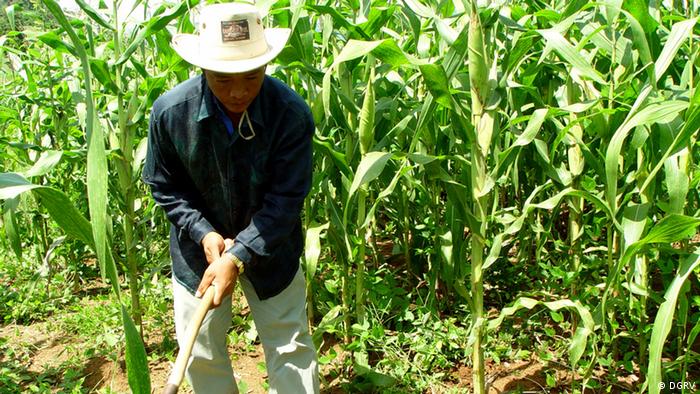
In Cambodia, land concessions and poaching are threatening wildlife and biodiversity, according to experts. The biggest problem thereby is government policy.
Experts say wildlife and biodiversity throughout the world are rapidly decreasing. Many countries are experiencing problems caused by illegal hunting and also a loss of habitat.
However, Cambodia has a unique story. While the government is cracking down on wildlife crimes, it has also been selling off protected wildlife sanctuaries to private agro-industrial firms.
Land concessions

Environmental activist Chut Wutty was shot dead in April, 2012
Cambodia has two main areas for the protection of tigers and biodiversity - the Cardamom Mountain range and the Eastern Plains. However, the tranquility of these areas is now threatened. Recently, the government opened 23 national parks and wildlife sanctuaries in 13 conservation areas to bidding by investment firms, according to a report by Licadho, a Cambodian human rights group.
The report further stated that the Cambodian government granted economic land concessions to more than 200 firms over the past decade and that the concessions covered 22 percent of the country's surface. It affected hundreds of thousands of families, wildlife and biodiversity.
Wednesday, 22 August 2012
Alleged secessionist plot leader has fighting words for PM Hun Sen
PPP - Wednesday, 22 August 2012 May Titthara
Wanted so-called secessionist plot ringleader Bun Ratha
blasted Prime Minister Hun Sen during a radio interview yesterday, dismissing
as “fake” allegations the premier has levelled against him, Beehive Radio
Station director Mam Sonando and rights worker Chan Soveth.
Ratha, who fled into hiding just before he was targeted
during a brutal security forces crackdown on a village in Kratie province that
left a 14-year-old girl dead in April, is wanted along with several others for
his alleged role in trying to form an autonomous mini-state.
During an interview with Radio Free Asia yesterday, Ratha
said anyone who dared to question the government’s real motivation for the
crackdown, which he maintains was to forcibly end a land dispute, was being
targeted with the same fictitious allegations.
“I would like to deny that I am involved with Chan Soveth.
And I think Mr Hun Sen is creating more fake evidence to shut up any official
or people who dare to talk about the issue of Pro Ma village, Kampong Damrei
commune in Kratie,” he told Radio Free Asia.
Chan Soveth, a senior investigator with the rights group
Licadho, has been summonsed to court on the vague charge of “assisting specific
perpetrators” that an anonymous court official has told the Post is in relation
to his alleged connection to secessionist allegations.
Mam Sonando, who regularly used his radio station to air
outspoken criticisms of the government, was arrested and charged in July, also
in connection with the plot, which the government claims was led by a group
called the Association of Democrats.
Ratha said he had nothing to do with the Association of
Democrats and that the prime minister was inventing information to conceal the
real reason for the government crackdown on Pro Ma village – corrupt local
government officials trying to steal land.
Ministry of Interior spokesman Khieu Sopheak said Bun
Ratha’s allegations were unlikely given the government never acted like that
toward its own people.
“What he is saying is only for the purpose of seeking
political asylum,” he said.
The Post was unable to contact Bun Ratha for comment
yesterday.
To contact the reporter on this story: May Titthara at
titthara.may@phnompenhpost.com
Prosecutors File Arguments in Effort to Return Cambodian Statue
21st August 2012

Federal prosecutors seeking to repatriate a 10th century statue to Cambodiafiled court papers Monday accusing Sotheby’s of knowing the sculpture “was an important piece of cultural property that had been stolen” from a remote temple complex when the auction house put the massive sandstone artifact up for sale in March 2011.
In June, Sotheby’s had asked a federal judge in Manhattan to dismiss the U.S. government’s civil action to force the return of the statue of a Hindu warrior that was originally located at a temple site in Koh Ker.
Sotheby’s has argued that Cambodia never declared ownership of the statue before the auction house sought to sell it for as much as $3 million on behalf of its Belgian owner and that no one has provided proof the item was stolen.
In their new filing, the prosecutors included statements from two heritage law experts who said that, under Cambodian and British law, the statue should be treated as stolen property.
One expert, Matthew Rendall, said the statue is covered under Cambodian statutes, royal orders and decrees dating to the early 1900s that declare such items to be the “exclusive” and “immovable” property of the government. Mr. Rendall noted five occasions between 1985 and 1997 when Sotheby’s returned sculptures to Cambodia after claims they had been looted sometime after 1970.
Sotheby’s says the sculpture could have been spirited away any time during its thousand-year history and was bought in good faith by the husband of its current owner in 1975 from a London dealer.
Experts cited by the United States and Cambodian governments insist the statue was removed more recently. The say it was too remotely located and too heavy – more than 600 pounds — to have been carried off until adequate roads were built into the region sometime after 1960.
Cambodia rejects allegations about Muslims' joining insurgent networks in Thailand
 |
| Cham muslim children in Cambodia |
22-08-2012
PHNOM PENH, (Xinhua): Cambodia on Wednesday rejected Thai allegations that some Cambodian Muslims have joined violent insurgent networks in Thailand's far South, saying the allegations are groundless and unacceptable.
"The allegations are absolutely groundless and unacceptable," Koy Kuong, spokesman for the Ministry of Foreign Affairs, said on Wednesday. "They are innocent people. Thai competent authorities should find out the fact and real evidence before making such baseless allegations."
The spokesman's reaction was made after the Bangkok Post online quoted Thai army chief Prayuth Chan-ocha as saying on Tuesday that some Cambodian Muslims have joined violent insurgent networks in Thailand in the far South.
It is estimated that around 1,000 Cambodian Muslims entered Thailand for jobsvia border checkpoints in eastern provinces each month.
"The main reason [they leave Cambodia] is poverty. They have no jobs in their homeland, so they must work elsewhere," Prayuth said. "Most of them do not aim to get involved in terrorism ... but they may give indirect financial support."
Koy Kuong said it is the freedom of choice in seeking jobs overseas. In Cambodia, many foreign nationals are working and performing their businesses, including Thai people.
"Cambodian people go abroad, including Thailand, for some reasons like tourists, businessmen, job seekers or visiting their relatives," he said, adding that at present, a lot of jobs have been created mostly at various private sectors in Cambodia.
Exploring Cambodia's temples off the beaten track
Each year more than a million tourists visit the temples at Angkor Wat in Cambodia. It is one of the world's greatest religious monuments and the area is becoming increasingly congested.
But if you are in search of rest and reflection, the country is blessed with hundreds of other temples - some of which rival the mystery and majesty of Angkor.
Michelle Jana Chan reports.
Restoring ancient monuments at Cambodia's Angkor Wat
 Many of the Apsara sculptures at Angkor Wat were destroyed
"Look at that one - she's got really big lips".
Sasha Constable is admiring the carvings of the Apsara nymphs on the walls of Cambodia's most famous ancient temple, Angkor Wat. Every year, millions of visitors do much the same. The bas reliefs at this 900-year-old monument are remarkably well-preserved.
But Sasha is no tourist - she is a sculptor herself and a member of one of Britain's most famous artistic families. Her father Richard is a well-known painter - and she can trace a direct line back to John Constable.
Sasha has carried on the traditions of the dynasty, while taking a distinct path of her own.
Since 2000 she has been based in Cambodia. As well as creating her own work, she has contributed to the country's artistic revival as a teacher and curator.
As much as anyone, Sasha has helped to raise the international profile of Cambodian art, helping young artists to make a living from their passion.
"Cambodian artists are being profiled more and more," she says.
"Now some are exhibiting abroad and their work is being exposed to a different audience. That means the prices go up, which is good for them. It's one of the last countries in this region where art has suddenly become more and more interesting to people."
'Privileged'
Now, after everything that Sasha has offered Cambodia, the country is giving something back. Perhaps the greatest prize she could have imagined: a commission to recreate some of the lost carvings at Angkor Wat.
"It's a huge privilege. It was a really interesting, challenging project - but really just a privilege."
Joining Sasha at Angkor, sweltering in the afternoon sun, is Cheam Phally of the World Monuments Fund.
She was the architect in charge of restoring one of the temple's best-known features - a long, bas relief gallery known as "the churning of the sea of milk", displaying scenes from the Hindu epic, the Ramayana.
But something was missing from the restoration. The Apsara figures which once decorated the gallery's roof were gone - victims of the passage of time or, perhaps, looters.
Sitting on the grass in front of the gallery, Cheam Phally points to what look like some lumps of rock among a number of larger slabs.
"These are fragments of the Apsaras, the lower halves," she says, picking one up, then placing it in a hole in one of the slabs.
"It would have gone in the roof stone like this."
The WMF's commission was for Sasha to recreate the Apsaras, with the aim of placing them on the roof of the restored gallery.
"We wanted to bring the sculptures back to the public - and to rebuild them we needed someone who understood Khmer art. Sasha has a deep understanding."
'Very proud'
The British artist enlisted local sculptor Chhay Saron to join her in researching - and making - the pieces.
 Chhay Saron sees his work as a contribution to future generations
He has a remarkable story of his own - a former soldier and landmine survivor who retrained as a sculptor, and now employs other disabled people in his workshop within the Angkor temple complex.
"As a Khmer person, when I see an Apsara sculpture I feel so happy," he says. "A lot of the ancient Apsara sculptures have been damaged - that's why I'm so pleased to have been given this assignment."
Now, after months of work, the two have completed their sculptures. At her workshop, Sasha proudly unveils one of the finished pieces, pointing out how the design will allow the light to pass through.
"We were asked to make each sculpture different, as they would have been in the day. Some have different levels of detail - this one is a little bit plainer, but still has motifs around the edge."
"They're a lot more delicate than many of the sculptures at Angkor. It should give the public an image of what Angkor would have looked like in the original day."
Just down the road, Chhay Saron has finished his two pieces - and he can hardly wait for them to take their place at Angkor Wat.
"When people come by to look at my carvings they haven't seen the likes before, because the originals were damaged and destroyed. They always ask where they're going to end up - and I tell them they will be on top of Angkor Wat."
"Future generations will be able to see this and understand that there were sculptures like this in the Angkor temples. I'm very proud."
The finished work is in keeping with the legacy of Angkor - and represents a proud moment in the illustrious history of the Constable family. One suspects that great, great, great grandfather John would have approved.
Subscribe to:
Comments (Atom)