
As it seeks connectivity, Phnom Penh must build diplomatic bridges with as much effort as it constructs ports and canals
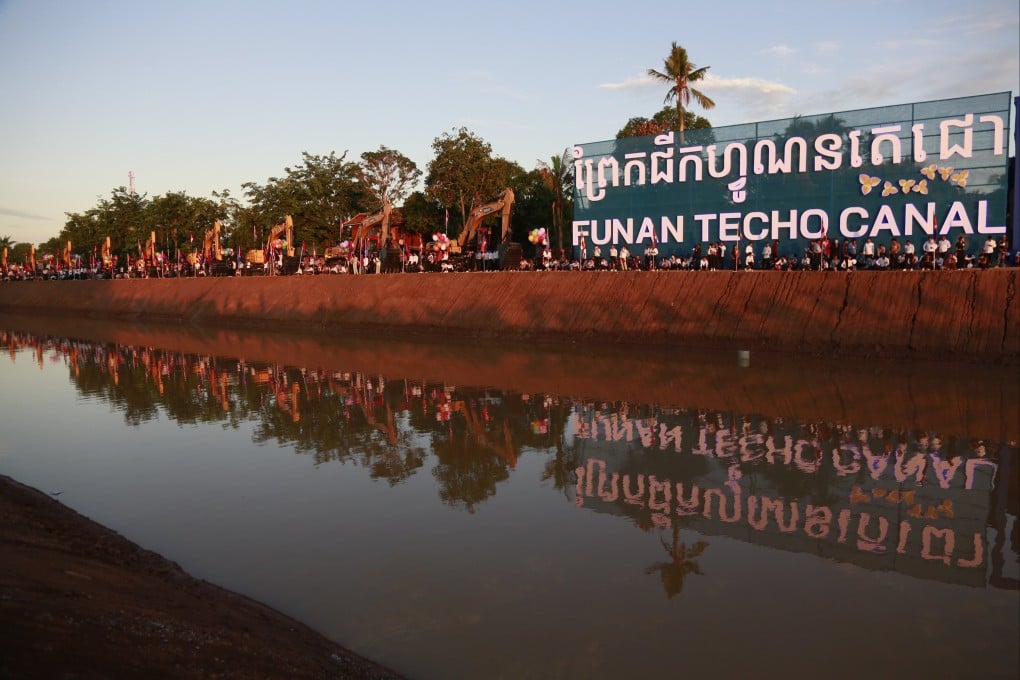
People arrive at the construction site of the Funan Techo canal along the Prek Takeo channel in Kandal province, Cambodia, on August 5, 2024. Photo: EPA-EFE
Stefano Arroque is a researcher in EU affairs, Central European politics and EU-Southeast Asia relations.
Published: 5:30am, 15 Jul 2026
scmp
Connectivity can be an ambiguous term. Different states use it in different ways at different times. In Southeast Asia, as in other regions where regional diplomacy exists in the backdrop of ever-stronger great power disputes, connectivity lies in the conflux of economics, trade necessities and the unyielding pressure of geopolitics.
In few countries is this more evident than in Cambodia, where investment in transport logistics has been a political and diplomatic fixture for at least two decades.
Last year’s brief but intense armed conflict with Thailand, and the border closures that ensued, were nonetheless a watershed moment. The border closures sent major shock waves through Cambodia’s economy. Until May 2025, the border was one of the main entry points for Cambodian goods into the global economy, benefiting from Thailand’s port infrastructure and already established maritime network.
From the beginning of the hostilities, analysts questioned the nature of Cambodia’s economic resilience. Reliance on Thai companies and exports in certain strategic sectors such as oil and energy, the heavy use of Thai roads and ports, and the prospect of a long war cast doubts on Cambodia’s short-term economic prospects. For Cambodia’s connectivity plans, the border conflict appeared at first to be a swansong. It was, instead, a perfect storm.
In few countries is this more evident than in Cambodia, where investment in transport logistics has been a political and diplomatic fixture for at least two decades.
Last year’s brief but intense armed conflict with Thailand, and the border closures that ensued, were nonetheless a watershed moment. The border closures sent major shock waves through Cambodia’s economy. Until May 2025, the border was one of the main entry points for Cambodian goods into the global economy, benefiting from Thailand’s port infrastructure and already established maritime network.
From the beginning of the hostilities, analysts questioned the nature of Cambodia’s economic resilience. Reliance on Thai companies and exports in certain strategic sectors such as oil and energy, the heavy use of Thai roads and ports, and the prospect of a long war cast doubts on Cambodia’s short-term economic prospects. For Cambodia’s connectivity plans, the border conflict appeared at first to be a swansong. It was, instead, a perfect storm.
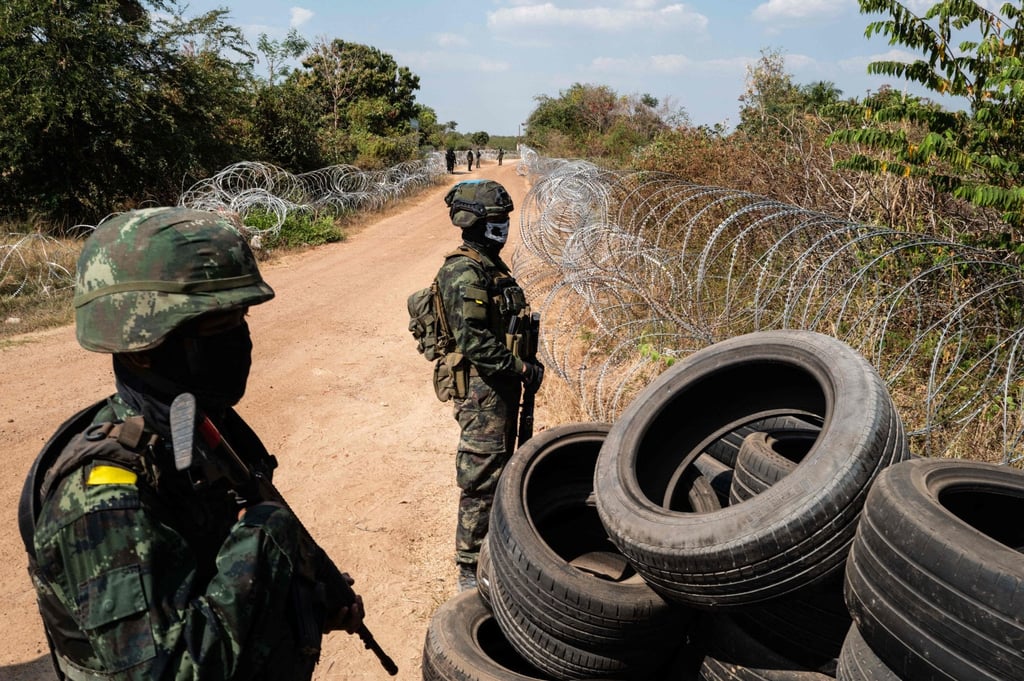
Thai soldiers stand guard near barbed wire and tyres installed to mark the border with Cambodia, near Sadok Kok Thom Historical Park in Thailand’s Sa Kaeo province, on February 5. Photo: AFP
Phnom Penh had plans to turn the country into a major connectivity hub in the so-called Greater Mekong Subregion long before last year’s conflict. As in much of Southeast Asia, Cambodian investments in transport logistics have been at once a means of increased integration into global trade routes, as well as raising the country’s political and diplomatic profile. As the economy grew, so did demand for infrastructure, both inward- and outward-looking.
Timing was also on Phnom Penh’s side. China’s Belt and Road Initiative saw a shift away from pure, classic geopolitics towards a more geoeconomic understanding of great power disputes. Beijing’s regional and global rivals, wary of losing their own regional influence, reacted to the belt and road plan with their own spending pivots.
From Tokyo to Brussels, investment and infrastructure-building programmes were announced, with Southeast Asia as a key region. Where lines were once drawn by armies and gunboats, they were now being drawn in ports, canals and highways.
Since the ceasefire with Thailand, Cambodian policy has been one of accelerated connectivity development. Rather than changing plans or abandoning them altogether, the country has doubled down on transport infrastructure investment, with a renewed sense of immediacy.
More than becoming a regional hub, Cambodia sought to leverage its connectivity boon to uphold economic sovereignty. This, in Cambodian terms, entails reducing the two regional dependencies that have marked the country’s recent history – on Thailand and Vietnam.
Timing was also on Phnom Penh’s side. China’s Belt and Road Initiative saw a shift away from pure, classic geopolitics towards a more geoeconomic understanding of great power disputes. Beijing’s regional and global rivals, wary of losing their own regional influence, reacted to the belt and road plan with their own spending pivots.
From Tokyo to Brussels, investment and infrastructure-building programmes were announced, with Southeast Asia as a key region. Where lines were once drawn by armies and gunboats, they were now being drawn in ports, canals and highways.
Since the ceasefire with Thailand, Cambodian policy has been one of accelerated connectivity development. Rather than changing plans or abandoning them altogether, the country has doubled down on transport infrastructure investment, with a renewed sense of immediacy.
More than becoming a regional hub, Cambodia sought to leverage its connectivity boon to uphold economic sovereignty. This, in Cambodian terms, entails reducing the two regional dependencies that have marked the country’s recent history – on Thailand and Vietnam.
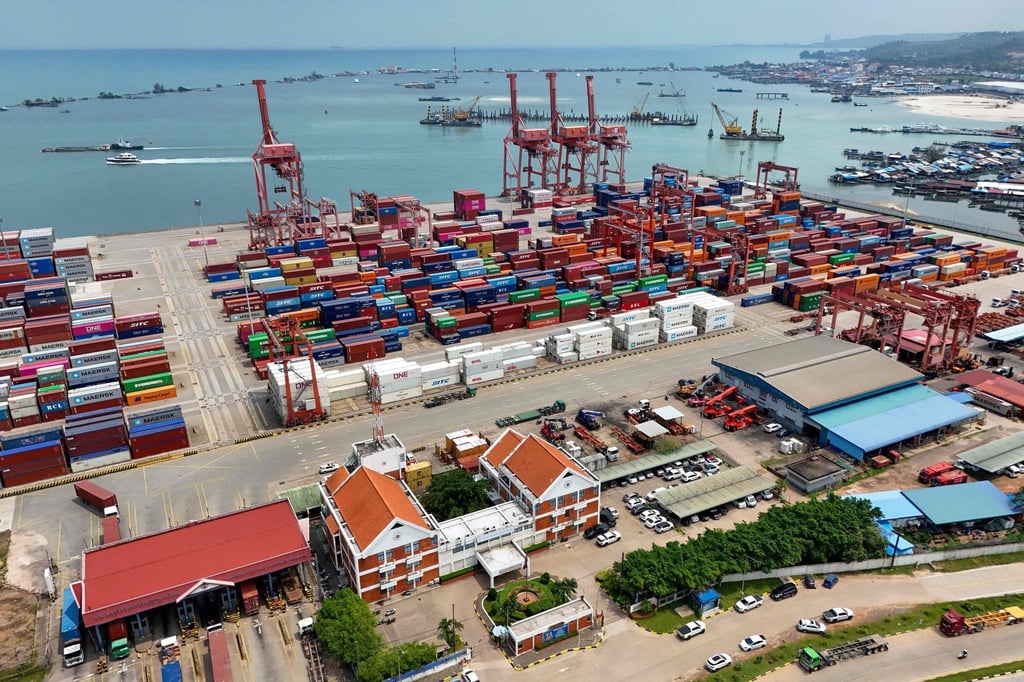
An aerial view shows Sihanoukville Autonomous Port in Preah Sihanouk province on April 9, 2025. Photo: AFP
When it comes to connectivity in Cambodia, all roads and all vessels lead to Sihanoukville. The port city has been at the centre of several transport investment projects since at least the turn of the century. Sihanoukville is the country’s main seaport and the only one with deepwater capacity. This crucial logistical and commercial role is written in concrete and steel atop the city’s skyline and along its surroundings.
Sihanoukville, besides being Cambodia’s maritime door to the world, is a microcosm of its geoeconomics. The port was built with French support in the 1950s, hence its Gallicised name. It is presently undergoing an expansion with Japanese funding. From around 30 per cent of the region’s ships reportedly calling at Sihanoukville, port authorities expect an increase to up to 98 per cent by 2027.
When it comes to connectivity in Cambodia, all roads and all vessels lead to Sihanoukville. The port city has been at the centre of several transport investment projects since at least the turn of the century. Sihanoukville is the country’s main seaport and the only one with deepwater capacity. This crucial logistical and commercial role is written in concrete and steel atop the city’s skyline and along its surroundings.
Sihanoukville, besides being Cambodia’s maritime door to the world, is a microcosm of its geoeconomics. The port was built with French support in the 1950s, hence its Gallicised name. It is presently undergoing an expansion with Japanese funding. From around 30 per cent of the region’s ships reportedly calling at Sihanoukville, port authorities expect an increase to up to 98 per cent by 2027.
Inside the port’s terminals, Chinese, French, Japanese, Thai and other companies and operators work alongside local ones. The highway between Sihanoukville and Phnom Penh is a belt and road project. Though another seaport is under construction, Sihanoukville may become one of the Mekong region’s primary and busiest seaports following its expansion.
Beyond Sihanoukville, Beijing remains the dominant external player in Cambodia’s connectivity efforts. Cambodia’s plan to build an inland canal connecting Phnom Penh to Sihanoukville is being carried out with Chinese support and financing. The US$1.7-billion, 180km-long Funan Techo canal, presently under construction, will connect the Mekong basin to the sea, thus reducing Cambodia’s dependence on Vietnam’s fluvial routes.

Cambodian Prime Minister Hun Manet and his wife Pich Chanmony press the button during a groundbreaking ceremony of the China-funded Funan Techo canal which will connect Phnom Penh with the coastal province of Kep, on August 5, 2024. Photo: AP
As Cambodia seeks upper-middle-income country status, Prime Minister Hun Manet has emerged as a strong supporter of the project, hailing it as fundamental to the country’s development. Funan Techo is both a colossal infrastructural endeavour and a risky diplomatic gambit. Vietnam is suspicious of the project, on environmental grounds, but just as likely for economic and geopolitical reasons.
If Funan Techo is completed, Vietnam loses existing revenue from Cambodian vessels. The canal’s financing by China, Vietnam’s main rival for influence in the Greater Mekong Subregion, further adds to Hanoi’s political and security concerns.
Cambodia’s connectivity strategy showcases the inseparability of connectivity policy with hard geopolitics. In the Sihanoukville microcosm, one sees, at once, the successes and risks that come with embracing one’s geoeconomic potential. Phnom Penh has, so far, weathered them well, even against unfavourable circumstances.
The border with Thailand remains tense. As projects advance in the Funan Techo canal, the risk of diplomatic rows with Vietnam remains. As Cambodia becomes one of the Mekong region’s main connectivity hubs in the coming years, it will need as much acumen in building diplomatic bridges as it has had in building ports and canals.
If Funan Techo is completed, Vietnam loses existing revenue from Cambodian vessels. The canal’s financing by China, Vietnam’s main rival for influence in the Greater Mekong Subregion, further adds to Hanoi’s political and security concerns.
Cambodia’s connectivity strategy showcases the inseparability of connectivity policy with hard geopolitics. In the Sihanoukville microcosm, one sees, at once, the successes and risks that come with embracing one’s geoeconomic potential. Phnom Penh has, so far, weathered them well, even against unfavourable circumstances.
The border with Thailand remains tense. As projects advance in the Funan Techo canal, the risk of diplomatic rows with Vietnam remains. As Cambodia becomes one of the Mekong region’s main connectivity hubs in the coming years, it will need as much acumen in building diplomatic bridges as it has had in building ports and canals.
Stefano Arroque is a researcher in EU affairs, Central European politics and EU-Southeast Asia relations. He was most recently a visiting fellow at the Danube Institute,


1 comment:
Under the rule of an ignorant Yuon slave Hun Sen, it would not be strange if Cambodia became a second Champa. This Yuon subservient Hun Sen would do whatever it took to please his Yuon master to stay in power.
Post a Comment