
The Chinese-funded base already faced intense scrutiny before the appearance of the long-range LCQ-776 at the Golden Dragon 2006 exercises
Amber Wangin Beijing
Published: 12:00pm, 28 Nov 2026
scmp
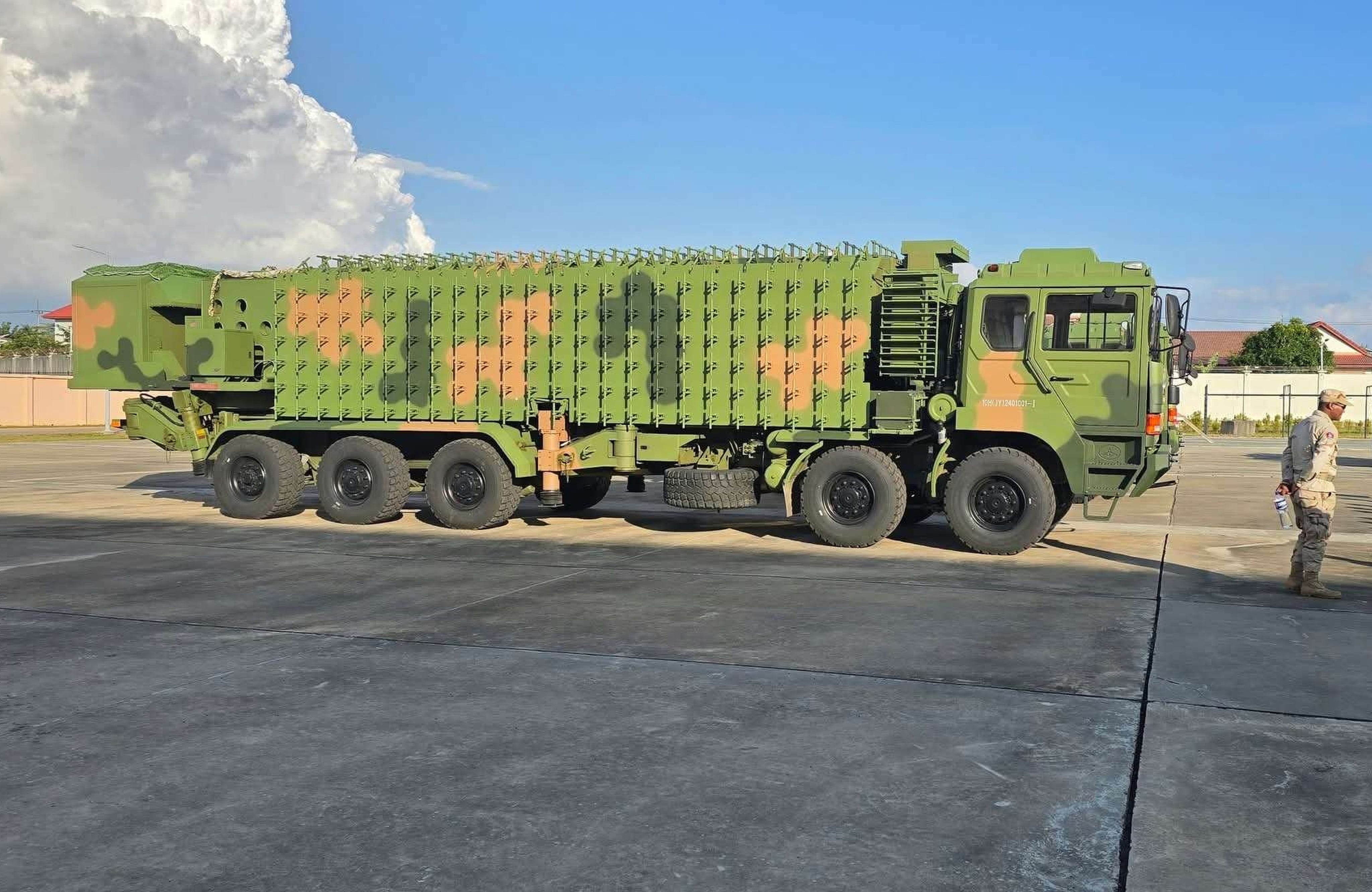
Chinese-made long-range radar equipment has been spotted at Cambodia’s Ream Naval Base during the ongoing Golden Dragon 2026 exercises, a move likely to draw fresh attention to the air surveillance capabilities at the Chinese-funded naval facility.
Photos and video released to local media showed an LCQ-776 air surveillance and early warning radar alongside Cambodian troops and mounted on a truck with a Royal Cambodian Armed Forces licence plate.
It remains unclear whether this indicates the system has been transferred to the Cambodian military or is only there for the joint exercise with the Chinese military, which will run until December 9.
They are the first known pictures of the radar taken in Cambodia and follow years of speculation about surveillance equipment at the base. The system is capable of tracking aircraft up to 500km (310 miles) away.
If installed at Ream, the 3D radar would be able to monitor parts of neighbouring Thailand and Vietnam as well as the surrounding waters.
Situated on the Gulf of Thailand, Ream Naval Base – one of three venues for this year’s exercises – has undergone extensive Chinese-funded expansion and modernisation in recent years.
In recent years, Beijing’s increasing presence at the strategically located base near the southern tip of Cambodia, close to the South China Sea, has fuelled Western concerns that China is seeking a military outpost in the region.
Cambodia has offered other navies access to the facility to dispel suspicions that it is giving China exclusive use and has denied that it hosts a Chinese base.
In 2023, the Cambodian military acquired a Chinese-made KS-1C surface-to-air missile system, which has a range of up to 70km, according to media reports.
Pairing long-range aerial tracking with Cambodia’s existing KS-1C batteries would effectively close a major gap in the country’s air-defence network.
“The installation of radars covering Cambodia’s air and maritime domains is particularly important,” Abdul Rahman Yaacob, then a research fellow at Australia’s Lowy Institute, wrote in a 2024 analysis.
He added that the radar would help the country’s military enhance its maritime domain awareness, detect potential air and sea threats, and protect commercial shipping.
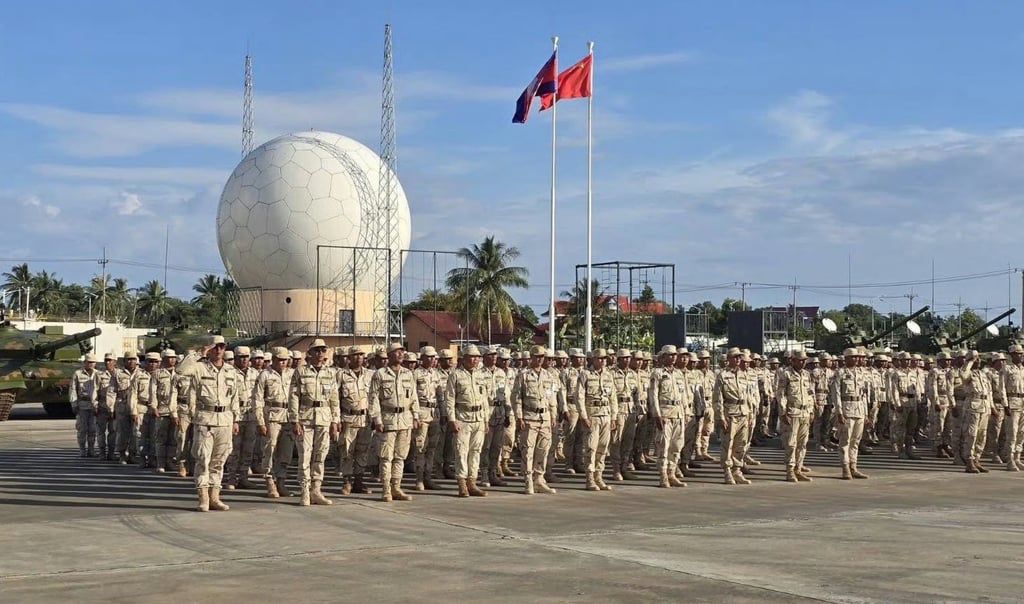
Other images from the exercise’s opening ceremony on Wednesday showed Chinese hardware, including Type 96A battle tanks.
In 2023, the Cambodian military acquired a Chinese-made KS-1C surface-to-air missile system, which has a range of up to 70km, according to media reports.
Pairing long-range aerial tracking with Cambodia’s existing KS-1C batteries would effectively close a major gap in the country’s air-defence network.
“The installation of radars covering Cambodia’s air and maritime domains is particularly important,” Abdul Rahman Yaacob, then a research fellow at Australia’s Lowy Institute, wrote in a 2024 analysis.
He added that the radar would help the country’s military enhance its maritime domain awareness, detect potential air and sea threats, and protect commercial shipping.
Other images from the exercise’s opening ceremony on Wednesday showed Chinese hardware, including Type 96A battle tanks.
The joint drills are the largest held so far and will run until December 9. Photo: Handout
The 15-day exercise involves 2,940 troops – including around 1,300 People’s Liberation Army personnel – and is the largest of the eight held since the Golden Dragon drills began in 2016.
This year’s exercises will focus on security threats such as terrorism and piracy, alongside humanitarian assistance, according to China’s state news agency Xinhua.
It added that the exercises were not targeting any third party or linked to regional dynamics or sensitive issues.
The PLA Air Force said on Thursday it would put its next-generation early warning radar on static display for the first time at the coming Zhuhai air show in early December, without disclosing further details.
Amber Wang is a reporter for the China desk, and focuses on Chinese politics and diplomacy. She joined the Post in 2021, and previously worked for The New York Times


No comments:
Post a Comment