
Following Arrests, Groups Issue Nine Principles of Internet Freedom
21
NGOs issued their nine principles, which include protections for the
human rights on the Internet, freedom of speech and freedom of
information.
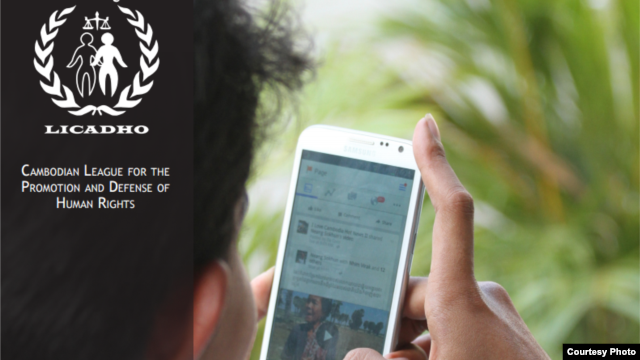 |
| LICADHO's report, Going Offline: The Threat to Cambodia's Newfound Internet Freedoms, issued in May 2015 (Courtesy Photo of LICADHO) |
Neo Vannarin, VOA Khmer
15 September 2015
PHNOM PENH—
Cambodian
pro-democracy and rights groups have written a statement of principles
to guide Internet freedom in the country, following the arrests of
activists for Facebook posts.
Social
media use has greatly expanded in the country in recent years, making
sites like Facebook an important place for people to engage in political
dialogue previously unheard of.
But
the arrests of activists, including a senator from the opposition
Cambodia National Rescue Party, and the looming prospect of a law to
govern cyberspace, has many people worried.
On
Tuesday, 21 NGOs issued their nine principles, which include
protections for the human rights on the Internet, freedom of speech and
freedom of information. No. 5, for example, says “everyone has the right
to use the Internet to receive and share information, including text,
photographs, video, databases, news and opinion. The State must ensure
public information is provided online.”
Ngin
Lyda, communications coordinator for the NGO Forum, which took part in
the campaign, said civil society is concerned about the recent arrests
and other acts of suppression on Internet Freedom.
“We
are concerned because it is a threat; social media users will be
scared, which will affect the freedom of speech,” Ngin Lyda said, adding
that social media remains a key place for Cambodians to express
themselves.
Meanwhile,
at Phnom Penh Municipal Court on Tuesday, Kong Raya, 27, appeared on
charges related to a post online, allegedly calling for a revolution.
His lawyer told the court such speech does not constitute “incitement,”
as charged. And last week, the Ministry of Interior announced the
establishment of a new department, to oversee the Internet and social
media.
Government
spokesman Phay Siphan acknowledged a crackdown on Internet users in
recent months, but he defended it as necessary to maintain social order
and public safety. “Yes, there is a restriction, but for people who are
conducting or about to conduct a revolution; or people who are
intentionally inciting, or disrupting the happiness and social order,
which is prohibited by law,” he said. “For the ordinary people, who
criticize, they are simply welcome.”


No comments:
Post a Comment